
Archives: Episode

  • Our Brains May Use Quantum Computation

    Our Brains May Use Quantum Computation

    Aaron Garcia
    Aaron Garcia
    Our Brains May Use Quantum Computation
    Loading
    /

    Scientists are exploring the possibility of using quantum computation in our brains to solve problems. Trinity College in Dublin, specifically the Trinity College Institute of Neuroscience (TCIN), conducted research on quantum gravity and its potential connection to the human brain. Their findings suggest that quantum brain processes could explain why our brains can outperform supercomputers.

    While traditional computers operate using binary code (zeros and ones), quantum computation encompasses a broader range of possibilities. This difference in computation methods may contribute to why humans possess free will, as we have the ability to make choices beyond what a programmed computer can do.

    Despite the advancements in technology, our brains have limitations compared to computers. We struggle with memorizing large amounts of information and maintaining persistent, errorless memory. Our brains function more analogously, with some similarities to analog computation that is less precise but allows for greater creativity and possibilities.

    Quantum physics offers insights into the fundamental nature of reality, including the interconnectedness of matter and the existence of antimatter. At the smallest scales, quantum phenomena introduce peculiar behaviors that challenge our understanding of the universe. Although these concepts remain a subject of ongoing scientific study, they open up new possibilities and provoke contemplation about the nature of our existence.

    While embracing progress can be met with resistance, history has shown that our understanding evolves over time. It is important to remain open-minded and adaptable to new ideas and discoveries. The future holds untapped potential, and by utilizing our brain’s full capacity and pushing the boundaries of knowledge, we can strive for positive advancements that benefit humanity.

    In conclusion, Aaron Garcia’s reflection highlights the significance of scientific exploration, the limitations of our current understanding, and the need for open-mindedness and progress. Our journey of discovery continues, challenging preconceived notions and leading us towards a deeper understanding of ourselves and the universe we inhabit.

    Send in a voice message: https://anchor.fm/aaronjgarcia/message
    Support this podcast: https://anchor.fm/aaronjgarcia/support

  • [Blank Space] feat. Chris Crooks

    [Blank Space] feat. Chris Crooks

    Aaron Garcia
    Aaron Garcia
    [Blank Space] feat. Chris Crooks
    Loading
    /

    Welcome to the podcast hosted by Aaron Garcia and featuring Chris Crooks. In this episode, Aaron shares an intriguing idea about creating a movie based on dreams, aiming to share the extraordinary experience with others. He delves into the fascinating nature of dreams, highlighting their lack of titles, intros, and definitive endings, making them a unique and often perplexing phenomenon. Chris recounts a dream he had, where the Cowboys triumphed in the Super Bowl, only to be abruptly interrupted before the thrilling climax, leaving him longing for the satisfaction of a dream realized.

    Passionate about the Cowboys, Chris expresses his unwavering support for the team, emphasizing that their success on the field is not the sole measure of their greatness. With a devoted fan base and an iconic brand, the Cowboys have transcended mere victories, earning the admiration and love of fans like Aaron. He even muses on the idea that the Cowboys’ pride and reputation outweigh the need for consistent wins, making them an enduring symbol in the world of sports.

    Exploring the realm of dreams further, Aaron contemplates the possibility of recording and visualizing these subconscious experiences. While recognizing the challenges of capturing dreams’ ephemeral nature, he ponders the potential for advancements in technology that could allow us to preserve and share the visual effects and narratives of our dreams, enabling others to partake in the wonder and enigma of these nocturnal adventures.

    Shifting gears, Aaron shares his thoughts on podcasts and their power to foster engaging and passionate conversations. He reflects on the spontaneity and depth of conversations we have with friends, those unrecorded moments that often carry the most genuine and captivating exchanges. Aaron reveals his approach to podcasting, seeking to curate content that captivates listeners from the very start, cutting out less compelling segments to focus on the heart of the discussion. He also invites listeners to participate by sending in their own audio recordings, creating an interactive and inclusive space within the podcast.

    Drawing parallels between Christopher Columbus’s journey to the New World and the prospect of space travel to Mars, Aaron envisions a future where Mars becomes a thriving city akin to our modern metropolises. Taking into account the advancements in technology and knowledge we possess today, he predicts that within 150-215 years, Mars could evolve into a fully developed civilization. Aaron emphasizes the importance of establishing ecosystems and terraforming Mars, acknowledging the need to overcome challenges to create a habitable environment for future settlers.

    Thank you for joining Aaron Garcia and Chris Crooks on this thought-provoking podcast episode, where dreams, football, space travel, and the future collide. Don’t forget to click the link provided to share your own audio recordings and be a part of the next exciting conversation.

    Send in a voice message: https://anchor.fm/aaronjgarcia/message

  • Why Kroger Delivery Might Overthrow H-E-B in San Antonio

    Why Kroger Delivery Might Overthrow H-E-B in San Antonio

    Aaron Garcia
    Aaron Garcia
    Why Kroger Delivery Might Overthrow H-E-B in San Antonio
    Loading
    /

    Hosted by Aaron Garcia, this thought-provoking podcast explores his unwavering belief in Kroger’s ability to surpass HEB in San Antonio, Texas by adopting an exceptionally efficient fulfillment delivery model. Contrasting the drawbacks of individual grocery stores that often lead customers astray and entice them into making impulsive purchases, Aaron advocates for the convenience and time-saving advantages offered by delivery services. Drawing inspiration from Amazon’s resounding success, he challenges the prevailing notion that personal selection of groceries is universally preferred, asserting that convenience holds paramount importance to consumers. The podcast underscores the manifold benefits of delivery, including its potential to curb the spread of diseases and maintain the freshness of food. Noteworthy is Aaron’s admiration for Kroger’s singular fulfillment center and utilization of refrigerated trucks, which he perceives as pivotal elements contributing to a more cost-effective and agile business model. Encapsulating these profound insights, the podcast passionately urges HEB to prioritize the integration of delivery services and embrace modernization, presenting it as an extraordinary opportunity for Kroger to reshape and revolutionize the grocery industry.

    Send in a voice message: https://anchor.fm/aaronjgarcia/message

  • Why Professors Need to Embrace ChatGPT

    Why Professors Need to Embrace ChatGPT

    Aaron Garcia
    Aaron Garcia
    Why Professors Need to Embrace ChatGPT
    Loading
    /

    In this passionate podcast segment, host Aaron Garcia reflects on the importance of embracing progress and technology in education. He shares his personal experience as one of the first students to bring a laptop to class back in 2007, successfully convincing his teacher that typing was a superior method of note-taking. Aaron criticizes resistant teachers who fail to grasp the concept of progress and the positive impact that technology can have on our lives.

    Throughout his discussion, Aaron praises the use of artificial intelligence, specifically highlighting ChatGPT, and commends students who utilize such tools as geniuses. He emphasizes the need for professors to recognize the existence of technology and its potential to drive humanity forward. Aaron passionately advocates for the embrace of new ideas, technological advancements, and the utilization of tools like calculators, online resources, and Wikipedia to enhance the learning experience.

    Drawing from historical examples, Aaron emphasizes the significance of adopting new technology, referencing Abraham Lincoln’s innovative use of trains and telegraphs during the Civil War. He stresses that progress and evolution are vital for survival and societal growth. While acknowledging concerns regarding laziness and misuse of technology, Aaron argues that progress should aim to make life easier and more efficient.

    Addressing educators directly, Aaron urges them to understand the importance of utilizing tools and encourages students to explore and educate themselves about new technologies. He highlights that progress involves trying new things, thinking critically, and making intelligent decisions. Aaron expands the definition of technology beyond electronic devices, highlighting examples such as laundry detergent with advanced formulas.

    In conclusion, Aaron asserts that embracing progress and technology leads to more efficient ways of accomplishing tasks and promotes a deeper understanding of interconnected information. He encourages his audience to click on hyperlinks, explore related ideas, and recognize the power of technology in expanding knowledge and improving lives.

    Send in a voice message: https://anchor.fm/aaronjgarcia/message

  • Data Breaches in Texas

    Data Breaches in Texas

    Aaron Garcia
    Aaron Garcia
    Data Breaches in Texas
    Loading
    /

    In this podcast episode, Aaron Garcia discusses the importance of cybersecurity in light of the increasing number of data breaches occurring daily. He highlights the requirement set by the Federal Trade Commission for businesses to enhance their security policies and conduct security assessments. Aaron emphasizes the need for businesses to take cybersecurity seriously due to the potential repercussions of data breaches on individuals’ lives. He refers to a list of breached companies provided by the Texas Attorney General’s website, showcasing the significant impact on Texans. Aaron stresses the potential dangers of personal data being exploited and the associated costs and headaches for victims. He further emphasizes the importance of businesses collecting only necessary information and implementing stronger encryption methods to protect customer data. Aaron suggests that businesses should focus on providing exceptional services and building a positive reputation through word-of-mouth rather than overly influencing customers’ buying behavior. He also calls for the government and businesses to explore alternative and secure methods of identifying individuals that minimize the collection of unnecessary personal information. Lastly, Aaron encourages individuals to go above and beyond their roles to ensure efficient operations and care about the overall success of their workplaces.

    Send in a voice message: https://anchor.fm/aaronjgarcia/message

  • What Do You Call a Full Page of Zeros?

    What Do You Call a Full Page of Zeros?

    Aaron Garcia
    Aaron Garcia
    What Do You Call a Full Page of Zeros?
    Loading
    /

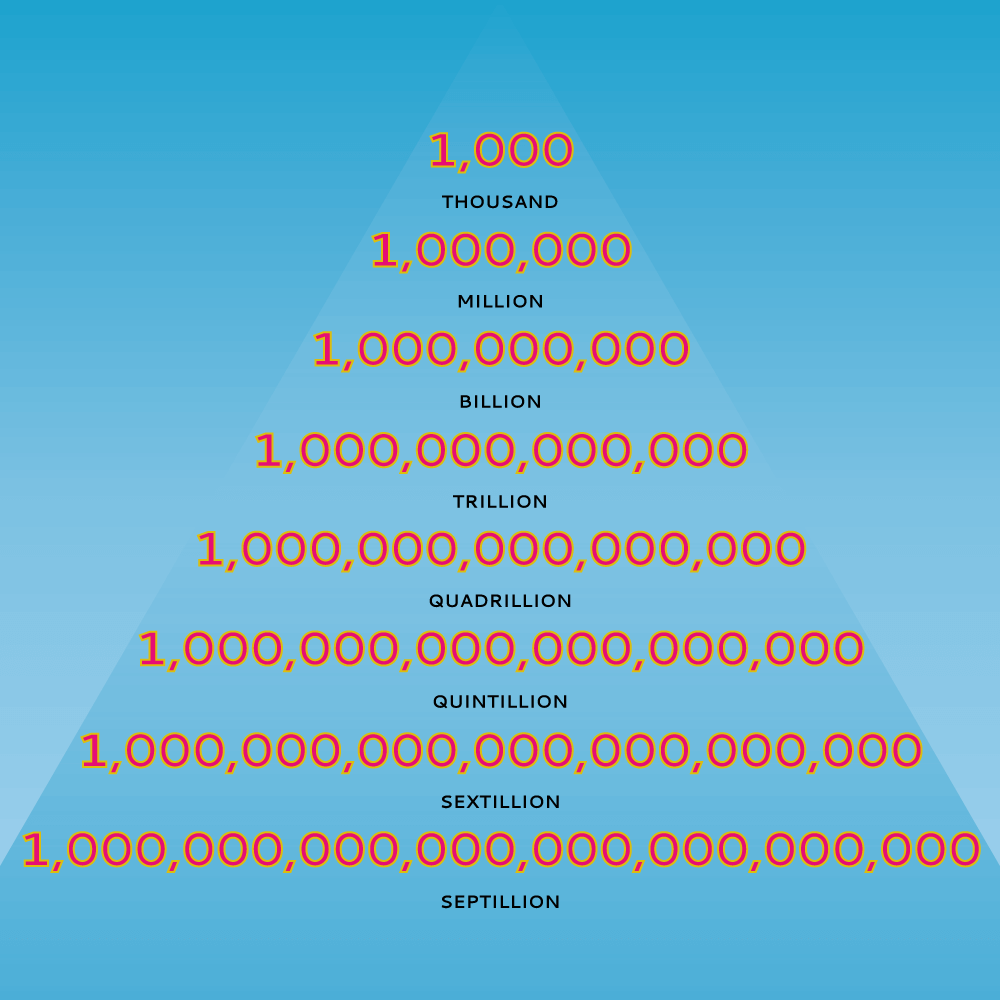
    Aaron’s podcast episode covers various topics, starting with his discovery of a video titled “Zero to Absolute Infinity.” He explores the concept of big numbers and creates a spreadsheet to organize them. He mentions different number names like quadrillion, quintillion, and vigintillion, and observes a pattern when using scientific notation, where the zeros increase by three.

    As Aaron delves deeper into extremely large numbers, he realizes that some are named after monsters and cubes. This leads him to ponder the process of naming numbers and whether he could name a number himself, specifically one with 7,338 zeros. He contemplates reaching out to prominent scientists like Neil deGrasse Tyson and Bill Nye for guidance.

    During the podcast, Aaron also shares his interest in science and math, and his enthusiasm for discussing random topics to inspire his coworkers. He mentions the use of an artificial intelligence app called Lensa to create an avatar for the podcast cover, as he found it more appealing than a regular photo. He concludes the episode by thanking listeners and encouraging them to subscribe and support the channel.

    Send in a voice message: https://anchor.fm/aaronjgarcia/message

  • New Ideas Are Never Welcomed, but They Always Happen

    New Ideas Are Never Welcomed, but They Always Happen

    Aaron Garcia
    Aaron Garcia
    New Ideas Are Never Welcomed, but They Always Happen
    Loading
    /

    Aaron’s podcast discusses the history of traffic lights. It begins by mentioning that the first traffic light in the world was installed in December 1868 in London, replacing a police officer who controlled traffic outside the Houses of Parliament.

    In the early 20th century, traffic signals similar to the one in London were used throughout the United States, with each state having its own design. These signals were often controlled by a traffic officer who would blow a whistle to signal the change in commands on the traffic light.

    In 1912, the first electric traffic light was developed by Lester Wire, a policeman in Salt Lake City, Utah. It was installed in Cleveland, Ohio. Then, in 1920, a police officer named William Potts in Detroit, Michigan created the first four-way, three-color traffic light. Potts was concerned about the synchronization of traffic lights and added a third light, the amber light, which indicates to drivers to slow down (though some people interpret it as a signal to speed up).

    In 1922, traffic towers with automatic timers began to control traffic lights. This innovation saved cities money by replacing traffic officers who manually operated the lights. The introduction of automated traffic lights allowed cities to reduce the number of traffic officers, resulting in significant cost savings.

    Overall, the podcast highlights the evolution of traffic lights and their impact on traffic control and public safety, as well as the cost-saving benefits of automated traffic light systems.

    Send in a voice message: https://anchor.fm/aaronjgarcia/message

  • You’re Richer Than a Pharaoh

    You’re Richer Than a Pharaoh

    Aaron Garcia
    Aaron Garcia
    You’re Richer Than a Pharaoh
    Loading
    /

    In this thought-provoking podcast episode hosted by Aaron Garcia, the focus is on the wealth and advancements of today’s world compared to ancient times. Aaron highlights the incredible technological achievements we now possess, making us wealthier than Egyptian Pharaohs in many ways. He contrasts the opulence and power of Pharaohs, who owned vast resources and forced labor to build grand tombs, with our modern technology and conveniences.

    Aaron humorously imagines showing a Pharaoh his Honda Civic, explaining the superior features like the 120 horsepower engine and the radio that can play any song. He emphasizes that our access to technology, knowledge, and resources surpasses anything a Pharaoh could have dreamed of. From having access to Google and free knowledge through libraries to the luxuries of air conditioning, running water, and modern amenities, our wealth is defined by the advancements we enjoy today.

    While acknowledging that some historical figures may have possessed immense wealth, such as Thomas Jefferson’s rare book collection, Aaron underscores the accessibility and abundance of knowledge we have through platforms like Google and Amazon. He also marvels at the incredible technological advancements, like the microphone he uses to record the podcast and the power of artificial intelligence.

    Aaron encourages listeners to appreciate the wealth they possess and recognize that previous generations would have only dreamt of such privileges. He prompts reflection on the vast computing power in our smartphones compared to the computers that sent people to the moon, highlighting the rapid progress made possible by technological advancements. He acknowledges the ongoing pursuit of acquiring certain abilities, like space travel, which private individuals like Elon Musk are now making possible.

    Ultimately, Aaron invites listeners to consider the continuous evolution and progress of civilization, as better things become accessible to the common person. He concludes with the notion that the possibilities and advancements of the future are bound to be even more fascinating and transformative.

    Send in a voice message: https://anchor.fm/aaronjgarcia/message